Home › Industrial and Heavy-Duty Asphalt Paving
Handle heavy loads with confidence using industrial asphalt paving in Tuscaloosa, AL. We design and build heavy duty surfaces for truck yards, loading docks, and warehouses with thicker sections and strong bases to resist rutting and failures.
Precision Asphalt Tuscaloosa provides professional industrial asphalt paving throughout Tuscaloosa, AL, Alabama and the surrounding area. Our licensed, insured crew delivers safe, clean, on-time work with a free estimate before anything begins. Call (205) 843-7673 or request your free quote.
Industrial Asphalt Paving Built for Real-World Loads
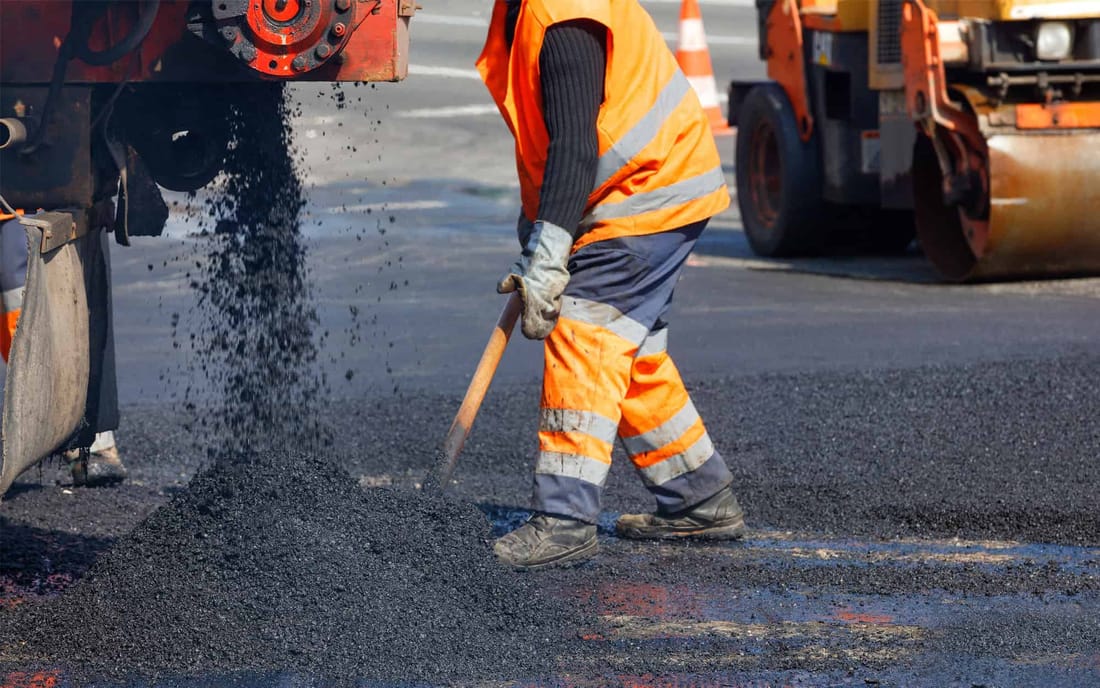
Industrial asphalt paving is not the same as paving a driveway or small parking lot. At Precision Asphalt Tuscaloosa, we design and install pavement that can stand up to constant truck traffic, heavy forklifts, loaders, and long-term fuel exposure. Our work throughout Tuscaloosa and West Alabama includes distribution yards, loading docks, plant access roads, and heavy equipment storage areas.
For industrial sites, the starting point is always load and use. We ask what types of trucks you run, how often they turn in place, where they stage, and whether you store loaded trailers for long periods. In Tuscaloosa, many customers run log trucks, dump trucks, and concrete mixers, which are among the hardest on asphalt. That information drives decisions about total pavement thickness, base material, and asphalt mix.
Industrial asphalt paving from Precision Asphalt Tuscaloosa typically involves a much stronger base than light-duty projects. Instead of a thin crusher run layer, we commonly install 8 to 12 inches of compacted aggregate base, sometimes more in soft or poorly drained soil. On top of that, we place multiple asphalt lifts, using different mixes for structural strength in the lower lifts and a tighter surface mix on top for fuel resistance and smoother travel.
How We Design Heavy-Duty Pavement for Tuscaloosa Sites
The design process for industrial asphalt paving starts with site evaluation. We look at your existing surface, soil conditions, and drainage patterns. In Tuscaloosa, we often see red clay subgrade that holds water and loses strength under heavy traffic. If we see pumping or rutting on your current pavement, that tells us we need additional base depth or undercutting.
Next, we consider traffic patterns. A warehouse where trucks pull in, park, then exit straight out can use a more uniform design. A plant entrance where trucks are stacking, turning, and braking hard at the gate needs thicker asphalt and often a stiffer mix. For loading docks and dumpster pads, we sometimes treat these as separate pavement zones with extra depth or concrete pads at the dock doors where trailer legs or dumpsters concentrate loads.
We also factor in Tuscaloosa’s climate. High summer heat can soften asphalt, especially where trucks turn slowly, which is why we specify mixes with the right binder grade for our region. We design thickness not only for supporting static loads but also to minimize rutting during hot months when your operation is busiest. Our goal is pavement that handles both the temperature swings and the heavy equipment without constant patching.
Step-by-Step Industrial Asphalt Paving Process
Industrial asphalt paving follows a more controlled process than most light-duty work. Precision Asphalt Tuscaloosa follows a clear sequence so the pavement actually performs as designed.
1. Site analysis and layout: We confirm grades, drainage, and traffic flow. If needed, we adjust slopes so water leaves the pavement instead of sitting in wheel paths or at dock doors.
2. Demolition and subgrade preparation: For failing pavements, we mill or excavate the existing surface down to a stable layer. Soft areas are undercut and replaced with better material. In parts of Tuscaloosa with very soft clay, we may use geotextile or thicker aggregate to prevent pumping and settlement.
3. Aggregate base installation: We place graded stone base in lifts, compacted with heavy rollers. For heavy-duty areas, we often run proof-rolling with loaded trucks or a loaded roller to identify any weak spots that may need further undercut.
4. Asphalt paving in multiple lifts: Industrial jobs rarely go down in a single layer. We place a substantial base asphalt layer first, then one or more intermediate lifts, and finally a finer surface course. Each lift is compacted to target density, which is critical for long-term strength.
5. Transitions and details: Dock doors, trench patches, manholes, and railroad crossings require extra attention so wheels do not hit sharp edges. We taper or ramp these areas and seal joints to limit water infiltration.
6. Striping and staging: For facilities that must keep operating, we phase the work so sections stay open when possible. Striping and traffic markings are laid out to match your operations, including truck routes, staging lanes, and equipment paths.
Material Options and Mix Choices for Heavy-Duty Use
For industrial asphalt paving, the mix choice matters as much as the thickness. Precision Asphalt Tuscaloosa works with local suppliers to specify industrial-grade mixes that match your use and the Alabama climate.
On structural layers, we use coarser mixes with larger aggregate that provide stiffness and load-carrying capacity. These mixes are not always the smoothest, but they are buried under the surface course, which gives you both strength and ride quality. For the top layer, we typically choose a tighter, finer-graded mix that helps resist fuel drips, oil, and slow turning.
In high-stress areas like loading zones where trucks back, turn, and brake repeatedly, we may specify a mix with a higher polymer-modified binder content to reduce rutting in high temperatures. Tuscaloosa summers can keep pavement surface temperatures high late into the evening, so we plan for long-term heat exposure rather than an average temperature.
We also discuss whether a sealcoat schedule makes sense. For heavy industrial pavement, sealcoating is not just cosmetic. It helps reduce oxidation from sun and weather, especially on surfaces that see sporadic use and may sit with standing water. However, for very high turning areas, we often delay the first seal for a couple of years until the asphalt has fully cured and any early wear patterns are visible.
What Drives Cost and Common Problems We Prevent
Industrial asphalt paving costs more than standard parking lots primarily because of depth, base work, and the need for stronger mixes. The main drivers are excavation and base thickness, asphalt tonnage, subgrade stabilization, and site constraints such as tight access or required phasing while your operation stays open.
In Tuscaloosa, one of the most common cost surprises on older industrial sites is hidden base failure. The surface may only show cracks and isolated rutting, but once we mill it, we sometimes find saturated or contaminated base material. Precision Asphalt Tuscaloosa tackles this by planning contingencies up front and explaining how unit pricing for undercut or base replacement will work so you are not guessing at final numbers.
We also design to avoid common industrial pavement failures: rutting in wheel paths, shoving at stop points, and edge failures along gravel shoulders. To reduce rutting and shoving, we combine thicker sections with the right mix and improved drainage. For edges, we recommend full-depth asphalt to the outer line of traffic or concrete curbing in areas where constant truck off-tracking is expected. Left unaddressed, these edge failures lead to rapid pavement breakup and more frequent repairs.
Drainage is another major cost and failure factor. A slightly steeper slope, added in design, can prevent long-term ponding that softens the base and causes potholes. We always review your drainage and advise if a few added inlets or re-graded swales are worth the investment.
What Tuscaloosa Industrial Owners Should Decide Before Hiring
Before you hire any contractor for industrial asphalt paving, you should know exactly how you use your site and what you expect it to handle in the future. Precision Asphalt Tuscaloosa helps you work through questions like whether your truck mix is likely to change, if you plan to add more loading docks, or if certain routes will go from occasional use to constant traffic.
We recommend walking your site with us to mark true heavy-duty zones: truck scales, staging lanes, fuel islands, forklift paths, and maintenance bays. Often we can save budget by building an industrial section where you really need it and using a lighter build where traffic is more moderate. This is more effective than applying one expensive design across the whole property.
Ask any contractor about section thickness, base specs, and mix design, not just the price per square foot. For industrial work in Tuscaloosa, you should be hearing numbers that match heavy-duty construction, such as multi-lift asphalt sections and substantial aggregate base. If you receive a quote that seems far cheaper than the others, confirm they are not proposing light-duty specs for a heavy-duty job.
With a clear plan for traffic, drainage, and long-term maintenance, your industrial asphalt paving can last many years without major disruption. Precision Asphalt Tuscaloosa focuses on that planning up front so you are not forced into costly shutdowns later to correct preventable pavement failures.